S&P 500 Dollar-Cost Averaging in 2026: The Math of Buying Monthly vs Waiting
Advertisement

A data-driven look at how monthly investing into an S&P 500 index fund compares with holding cash and trying to time the market, including historical return math and a practical plan.
The problem with ‘I’ll invest when things feel safer’
If you’ve ever had money sitting in a checking account because the market ‘felt weird,’ you’re not alone. Real talk: I’ve seen smart people with high FICO scores, solid 401(k) matches, and healthy emergency funds still freeze on investing because headlines are loud.
The question isn’t whether timing the market is hard. It’s whether waiting is expensive.
So let’s put numbers on it: buying the S&P 500 consistently (dollar-cost averaging) versus saving cash and trying to jump in later.
Data: what history says about the S&P 500, cash, and missing days
Here are the baseline facts that drive most long-term investing outcomes.
Long-run equity returns (the big picture)
Historically, U.S. stocks have delivered roughly ~10% average annual returns before inflation over long periods (that’s the well-known ‘stocks return about 10%’ rule of thumb). Actual results vary a lot year to year, but the long runway matters.
A simple way to frame it:
- Stocks (S&P 500): high volatility, high expected return
- Cash (savings, money market): low volatility, lower expected return
- Time in market: the main ‘edge’ normal investors can actually control
Missing the best days: a small number of days can matter a lot
A classic market-timing problem is that the best days often happen near the worst days—when ‘waiting for clarity’ feels most justified.
Here’s the general shape of the data many studies show (exact figures vary by date range and source, but the pattern is consistent):
| Strategy over a long period | Typical outcome vs fully invested |
|---|---|
| Fully invested | Baseline (best) |
| Miss the 10 best days | Much lower ending value |
| Miss the 20 best days | Dramatically lower |
| Miss the 30+ best days | Potentially cuts long-run returns in half-ish |
That’s why ‘I’ll just wait until the dust settles’ is usually a losing bet. The dust settles after the market has already moved.
WARNING
Trying to time the market usually fails for a simple reason: you have to be right twice—when to get out (or delay buying) and when to get back in. Most people only notice the ‘right time’ in hindsight.
Inflation is the silent tax on ‘waiting’
If your money is sitting in cash, you’re not just missing potential gains—you’re fighting inflation.
The Bureau of Labor Statistics CPI data is the official yardstick here, and it’s worth checking periodically because it’s what your grocery bill is responding to. (Source: https://www.bls.gov/cpi/)
Even if your savings account pays interest, after-tax returns may not keep up with inflation. Heads up: interest in taxable accounts shows up on a 1099-INT, and Uncle Sam wants his cut.
Analysis: dollar-cost averaging vs waiting (with math you can sanity-check)
Dollar-cost averaging (DCA) is just investing a fixed amount on a schedule (weekly, biweekly, monthly). The point isn’t to ‘beat’ lump-sum investing in all markets; it’s to create a system that keeps you investing through uncertainty.
The math: what monthly investing can look like
Let’s run a straightforward example. Say you invest $500 per month into a low-cost S&P 500 index fund (ETF or mutual fund) for 10 years. Assume a 7% annual return (a common ‘after-inflation-ish’ planning number).
Monthly rate ≈ 7% / 12 = 0.583%
Number of months = 120
Future value of monthly contributions:
FV ≈ P × [((1+r)^n - 1) / r]
FV ≈ 500 × [((1.00583)^120 - 1) / 0.00583]
(1.00583)^120 ≈ ~2.01
FV ≈ 500 × (1.01 / 0.00583) ≈ 500 × 173 ≈ $86,500
Your contributions were $500 × 120 = $60,000.
Estimated growth ≈ $26,500.
That’s the ‘compound interest’ engine doing the heavy lifting—not perfect timing.
What if you wait 12 months ‘for a better entry’?
Now assume you hold that $500/month in cash for a year, then start investing in year 2. Same 10-year window, same return assumption.
- You invest for only 9 years (108 months), not 10 years.
- You likely earn some interest on cash, but after tax it may not be impressive.
Using the same math with n = 108:
(1.00583)^108 ≈ ~1.87
FV ≈ 500 × [((1.87 - 1) / 0.00583] ≈ 500 × 149 ≈ $74,500
Difference: ~$12,000 over 10 years, just from delaying contributions one year.
Could waiting work out sometimes? Sure—if the market drops a lot and stays down long enough for you to buy meaningfully cheaper. But that requires (1) a drop, (2) your willingness to buy while it’s dropping, and (3) a rebound after you buy. How many people actually do that?
Practical example: a real local budget tradeoff (Austin, TX)
Let’s use a concrete ‘this is normal life’ example.
In Austin, Texas, the average price of regular gasoline has often bounced around the $3-ish per gallon neighborhood in recent years (it moves a lot—some months higher, some lower). If a household drives 1,000 miles/month at 25 mpg, that’s 40 gallons. A $0.50/gal swing is $20/month. Over a year: $240.
That doesn’t sound life-changing. But invested monthly for 20 years at 7%?
- $20/month for 20 years → FV ≈ 20 × [((1.00583)^240 - 1) / 0.00583]
- (1.00583)^240 ≈ ~4.04
- FV ≈ 20 × (3.04 / 0.00583) ≈ 20 × 521 ≈ $10,400
The takeaway: small, boring, repeatable cash-flow decisions can turn into real portfolio dollars. That’s bang for your buck investing.
If you want a lifestyle angle on freeing up monthly cash without ‘feeling’ like budgeting, I like the approach in Subscription Audit in 2026: The Lazy-Smart Way to Cut Bills Without ‘Budgeting’.
DCA doesn’t mean ‘ignore valuation’—it means ‘stop negotiating with yourself’
I’m pro-DCA because it’s behaviorally realistic. But you still want a plan.
ETF vs individual stocks: why the vehicle matters
If the goal is broad market exposure, an S&P 500 ETF (or total market ETF) generally gives:
- diversification across sectors
- low fees (expense ratios matter more than people think)
- less single-company blowup risk
If you’re newer to investing, it’s worth reading Index Funds vs Individual Stocks for Beginners in 2026: The Math, Risk, and a Simple Plan. My view: for most people, broad ETFs are the no brainer foundation, and individual stocks are the ‘satellite,’ if at all.
Practical example: a simple DCA setup for a W-2 household
Let’s say you’re paid biweekly and you want this to run on autopilot:
- Build/confirm an emergency fund (common target: 3–6 months of expenses).
- Contribute to your 401(k) at least up to the employer match (free money is undefeated).
- Set an automatic transfer to a Roth IRA or brokerage on payday (even $50–$200).
- Buy one broad index fund/ETF on a schedule.
This is the part people overcomplicate. The ‘best’ plan is the one you actually follow when the market is down 15% and your group chat is panicking.
TIP
If you’re tempted to pause investing when consumer sentiment turns sour, treat that feeling as a signal to check your asset allocation—not your headlines. ‘Vibes’ move markets, but they don’t pay your future bills. See Consumer Confidence in 2026: Why ‘Vibes’ Are Moving Markets (and Your Budget).
What about holding cash to ‘buy the dip’?
Keeping some cash is fine if it has a job:
- emergency fund (job loss, car repair, medical bill)
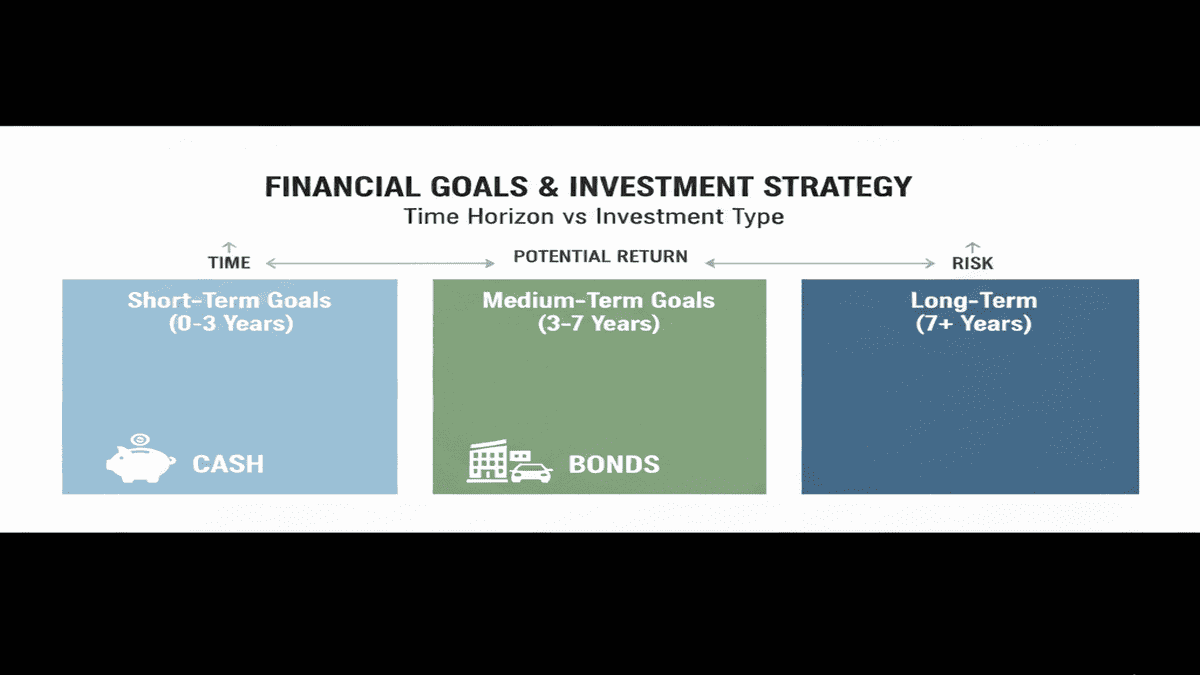
- near-term goal (down payment, tuition, moving)
- planned purchase within a short time horizon
But ‘cash to buy the dip’ often becomes permanent cash because dips don’t come with a calendar invite. And when they do show up, it feels awful to buy.
A better compromise I’ve used personally: invest on schedule, and if you must scratch the ‘buy the dip’ itch, keep it small and rules-based (like a one-time extra contribution when the market is down 15–20%). Don’t let it replace the baseline DCA.
Recommendation: a simple, rules-based DCA plan for 2026
Here’s the clean plan I’d recommend to a friend who wants to invest but doesn’t want to obsess.
1) Pick the account based on your goal and tax situation
Use this as a quick map:
| Goal | Common account | Why it fits |
|---|---|---|
| Retirement + tax benefits | 401(k), Traditional IRA, Roth IRA | Tax-advantaged compounding |
| Flexible long-term investing | Taxable brokerage | No retirement restrictions |
| Healthcare costs | HSA (if eligible) | Triple tax advantages (rules apply) |
For retirement accounts, keep an eye on IRS contribution limits and eligibility rules. (Source: https://www.irs.gov/retirement-plans)
2) Automate the contribution, not the decision
- Set a fixed dollar amount (start small if needed).
- Invest on payday (biweekly) or monthly.
- Revisit the amount when you get a raise, change jobs, or pay off debt.
If you’re negotiating income, the best investing hack is still earning more. Pay ranges matter more than most people realize; Salary Bands Explained: How to Use Pay Ranges to Negotiate a Better Offer in 2026 is a practical read.
3) Use a broad index fund as the core
My preference for most long-term investors:
- Start with a broad U.S. equity index fund (often S&P 500 or total market)
- Add bonds later if your risk tolerance/time horizon calls for it
- Keep fees low and turnover minimal
4) Write one rule for ‘when markets get ugly’
Example rule set:
- ‘I will keep buying monthly regardless of headlines.’
- ‘If I feel panic, I will reduce the amount of financial news I consume for 30 days.’
- ‘I will not sell equities for at least 5 years unless my goal changed.’
That last line is the whole game: match risk to timeline.
A quick reality check (because life isn’t a spreadsheet)
If your emergency fund is thin, your credit card APR is 25%, or your job feels shaky, it may be rational to hold more cash right now. Investing isn’t a morality test.
But if your finances are stable and the only thing stopping you is uncertainty—welcome to the club. Uncertainty is the normal price of admission for equity returns.
Bottom line: for most U.S. investors in 2026, a steady DCA plan into a low-cost S&P 500 index fund beats waiting for perfect clarity, because the math rewards time and consistency more than bravery at the bottom.

Derek Haines
Investment Analyst
Derek Haines is an investment analyst based in Denver, Colorado. He spent years at a mid-size asset management firm before turning to financial education. Derek breaks down ETFs, index funds, and portfolio strategies with data-driven clarity, helping everyday investors make confident decisions without the jargon.
Credentials: CFA Level II Candidate · B.A. Economics, University of Colorado